Is Your House Clearance Firm a Registered Waste Carrier? Check by Nation
Which register to search in England, Wales, Scotland and Northern Ireland, what a valid carrier number looks like, what you can be fined if your rubbish is fly-tipped, our check of the numbers 475 clearance firms print and fly-tipping by council. Read on 14 November 2026.
Updated
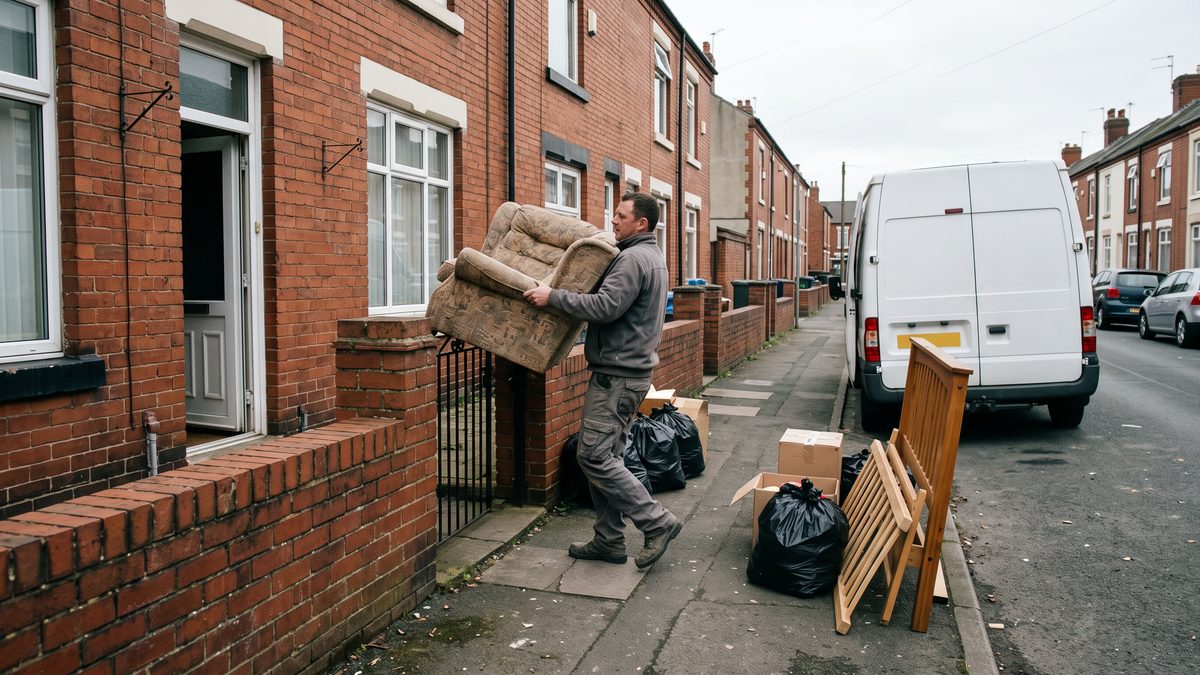
Anyone who takes away your old sofa, bin bags or fridge for money has to be registered to carry waste, and if it ends up dumped in a lay-by, the council can come after you as well as them. Tell the checker where you live and who is collecting, and it shows which register to search, what a valid number looks like and what to keep afterwards.
Register to search
What the number looks like
What it means for you
Worth keeping
If your waste is dumped and you did not check
We looked up the numbers clearance firms print
On 14 November 2026 we read the home page and up to three price or quote pages of every house clearance firm on Good Removals that has a website, 475 firms across the four nations. 124 of them print a waste carrier registration number on those pages.
| Nation | Print a number | Firms read |
|---|---|---|
| England | 113 | 433 |
| Wales | 7 | 17 |
| Scotland | 4 | 20 |
| Northern Ireland | 0 | 5 |
We then put the English numbers into the Environment Agency's public register. For 104 of the 113 English firms, the number matched an upper tier registration that runs beyond today. The other nine did not come up: a number can lapse, be mistyped on a website or belong to a firm registered in Wales or Scotland. We did not look up the Welsh and Scottish numbers, because those sit on the registers of Natural Resources Wales and SEPA.
What to take from it: most registered firms simply do not print the number where you would see it first, so its absence proves nothing either way. Ask for it before the day, and look it up yourself. It takes a minute. You will find clearance firms town by town on our house clearance lists, and smaller jobs on the man and van lists.
Fly-tipping in your council area, 2024/25
DEFRA publishes every English council's fly-tipping count each year. These are the councils that cover the English towns and cities on Good Removals, worst first, set against the England figure of 21.5 incidents for every 1,000 residents.
| Town or city, and the council in the data | Fly-tips | Per 1,000 residents |
|---|
Councils marked * counted only the fly-tips reported to them by the public in 2024/25, not the ones their own crews found, so their figures are lower than a full count would be. London is shown as one row for all 33 councils. Harrogate and Carlisle are counted within North Yorkshire and Cumberland, the large councils that now cover them. Councils also differ in what they count: Nottingham, for example, recorded 18,056 single black bags among its 26,138 fly-tips. Wales, Scotland and Northern Ireland collect their figures separately and are not in this English dataset.
Upper tier, lower tier and what registering costs a firm
The tier tells you what a firm may carry
An upper tier registration covers carrying other people's waste. A lower tier registration is mainly for organisations moving waste they produce themselves. The code of practice says a private business taking household waste away should hold an up to date upper tier registration, and that exceptions are very rare. Charities, voluntary organisations and councils can use lower tier.
A firm registered in England, Wales or Scotland with the agency where its business is based can work in all three. A firm that also carries waste to or from Northern Ireland needs to be registered with the Northern Ireland Environment Agency as well.
Registering costs a firm less than one full van load
A new upper tier registration costs £191.02 in England and lasts three years, with renewal at £130.25. In Wales it is £184, then £126 to renew. In Northern Ireland a new upper tier application is £191 and a renewal £96. Lower tier registration is free in all three. An English registration, good for three years, costs less than half the £410 median price of a single full van load of clearance on our lists.
Transporting waste without being registered can bring a fine of up to £5,000 in Scotland and Northern Ireland, and an unlimited fine in England.
Before the van arrives, and after it leaves
- Ask for the registration number when you book, not on the doorstep. In England and Wales a carrier has to show proof of registration when the police or an enforcement officer ask, so a firm that will not give you the number is telling you something.
- Look it up on the register for the nation where the firm is based, by number, name or postcode. Check the name matches the business you are dealing with and that the tier is upper.
- Keep a record. There is no legal duty for a householder to keep paperwork, but if your things turn up dumped, a receipt with the firm's details, a photo of its registration or a note of the van's make, colour and number plate can show you met your duty of care.
- Get a price in writing first. What firms on our lists charge for a quarter, half or full van load is in our removal and clearance price guide. A collection that costs far less than a firm would pay to dispose of the load deserves a second look.
- Moving out of a rented home? What the landlord can take from your deposit for cleaning is a separate set of rules, covered nation by nation in our deposit and cleaning guide.
Where the rules and figures on this page come from
All of it was read on official pages on 14 November 2026. The householder duty of care in England and Wales is section 34(2A) of the Environmental Protection Act 1990, in Scotland the same Act's Scottish text of section 34(2), and in Northern Ireland Article 5(2A) of the Waste and Contaminated Land (Northern Ireland) Order 1997. The penalties are sections 34ZA (England) and 34ZB (Wales) of the 1990 Act, and section 34(6) and Article 5(8) for Scotland and Northern Ireland. The English fixed penalty amounts are confirmed in the government's guidance to councils on household waste fixed penalties, updated on 1 April 2024, and what a householder should check comes from section 5 of the waste duty of care code of practice, updated on 26 November 2018.
Registration fees come from the carrier registration pages of GOV.UK for England, Natural Resources Wales and DAERA for Northern Ireland, and the Scottish rules from SEPA's page on transporting waste. The fly-tipping figures are DEFRA's statistics for England for 2024/25, with the council by council dataset, published on 25 February 2026. The firm count is our own, from the firms' websites and the Environment Agency register. The Northern Ireland register refused our connection, so the checker links the DAERA page that leads to it.
Every Act, register and dataset named here is linked once, nation by nation, in the source table on how we build the lists.