Can Your Landlord Take Cleaning Out of Your Deposit? England, Wales, Scotland and NI
Whether a landlord can make you pay for a professional clean, the deposit cap and protection deadline in each UK nation with a calculator, the approved schemes and how to challenge a cleaning deduction. Checked against official guidance on 14 November 2026.
Updated
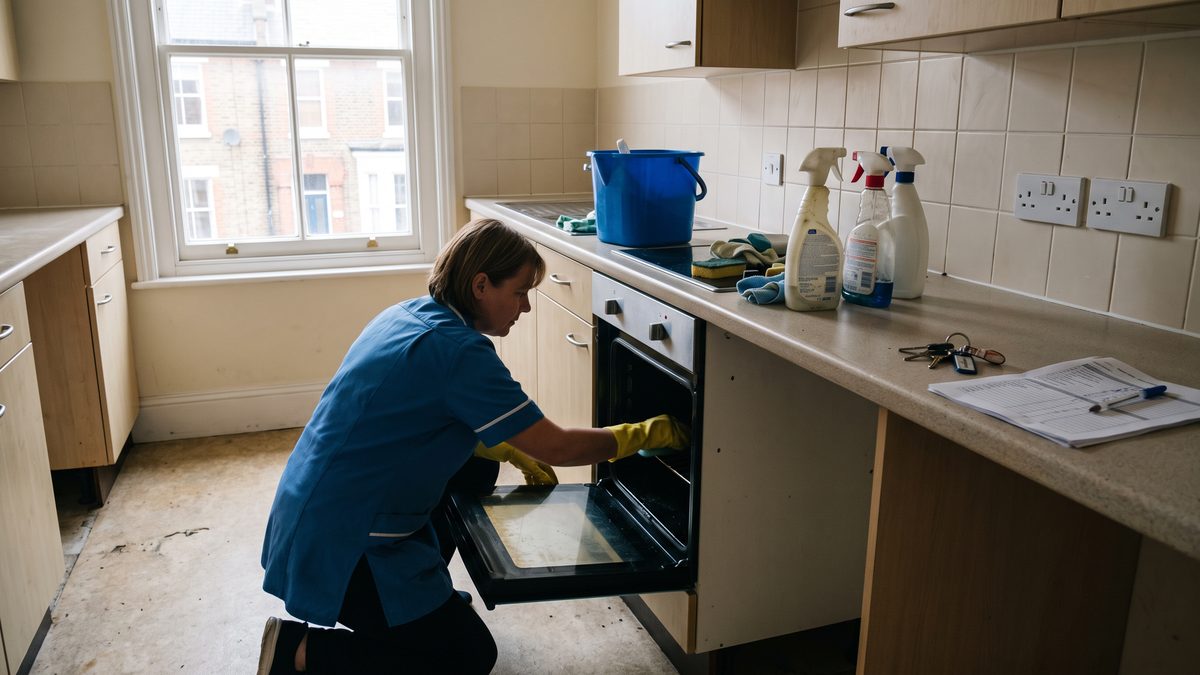
In England your landlord cannot make you pay for a professional clean when you move out, but can take the cost of cleaning from your deposit if you hand the home back in a worse state than when you moved in, allowing for normal wear and tear. Scotland's official guidance says much the same thing about cleaning bills. Wales and Northern Ireland have their own lists of what a landlord may charge, and all four nations have their own deposit schemes, caps and deadlines. This page sets them out side by side, with a calculator for the deposit cap.
What each nation says about cleaning and fees
No compulsory professional clean
The government's guidance on the Tenant Fees Act 2019, updated on 12 November 2026, says your landlord cannot require a regular cleaning fee or a professional clean when you move out. You are responsible for returning the home in the same condition as when you moved in, allowing for normal wear and tear. If it is left in a worse condition, the landlord may recover the cost of cleaning from the deposit or by claiming damages, backed by evidence of the cost.
Since 1 May 2026 most private tenancies in England are assured periodic tenancies, and the deposit still has to be protected in a government-approved scheme.
A short list of permitted payments
Under the Renting Homes (Fees, Discrimination etc.) (Wales) Act 2019, a landlord or agent can require rent, a security deposit, a holding deposit, payments in default that the contract sets out and payments for some bills such as council tax and utilities. The Welsh Government's guidance for tenants says anything else is a prohibited payment.
The deposit must go into an authorised scheme, and the landlord must give you the required information, within 30 days of it being paid.
Cleaning bills only if the home is left in poor condition
The Scottish Government's guidance lists cleaning bills among the costs a deposit can cover, if you do not leave the property in a reasonable condition. A landlord cannot use it to replace things that are damaged or worn by normal wear and tear. Charging any other fee for starting or renewing a tenancy, such as key money, credit check or administration fees, is against the law.
The deposit can be up to two months' rent and must be protected within 30 working days of the tenancy starting.
A one-month cap and a 28-day deadline
A landlord cannot ask for a deposit of more than one month's rent. The official guidance describes the deposit as covering unpaid rent or damage caused during the tenancy.
It must be protected in a Tenancy Deposit Scheme within 28 days of the landlord receiving it, and you should get written information about the tenancy and the scheme within 35 days.
Is your deposit over the limit?
England's limit is worked out from the yearly rent divided by 52, as the Act sets it: five weeks' rent if the rent is below £50,000 a year and six weeks' rent from £50,000. Monthly rent is turned into yearly rent by multiplying by 12.
Who holds the money, nation by nation
| Nation | Approved schemes | Must be protected | Cap on the deposit |
|---|---|---|---|
| England | Deposit Protection Service, MyDeposits, Tenancy Deposit Scheme | Within 30 days of the landlord getting it | 5 weeks' rent, or 6 weeks' from £50,000 a year |
| Wales | Deposit Protection Service, MyDeposits, Tenancy Deposit Scheme | Within 30 days of it being paid | No figure we could confirm |
| Scotland | Letting Protection Service Scotland, mydeposits Scotland, SafeDeposits Scotland | Within 30 working days of the tenancy starting | 2 months' rent |
| Northern Ireland | Tenancy Deposit Scheme Northern Ireland, My Deposits Northern Ireland | Within 28 days of the landlord getting it | 1 month's rent |
Pushing back on a cleaning deduction
- Put the check-in and check-out reports side by side. The test in England is the condition when you moved in, allowing for wear and tear, not a hotel standard. If the check-in report shows the oven was already grimy, a charge to make it spotless is hard to square with that test.
- Ask for the evidence of the cost. The English guidance says a landlord can only recover losses or costs actually incurred, and should show you the evidence. Charges meant to punish a breach, rather than cover a real cost, are generally unenforceable.
- Use the scheme's free dispute service. In England the scheme's adjudication is free, both sides have to agree to use it and the decision is final. In Scotland an independent adjudicator decides, and if the landlord cannot prove why a deduction should be made, you get the full deposit back.
- Mind the clock in Scotland. When the landlord asks the scheme for deductions, you have 30 working days to say whether you agree. If you do not reply, the landlord gets the deductions asked for.
- In England, chase the return. Once you and the landlord agree how much you get back, the landlord must return it within 10 days.
- If you paid a fee that was not allowed in England, you can ask for it back, report it to the council, which can fine the landlord, or apply to the First-tier Tribunal.
If you decide to pay a cleaner anyway
Many tenants book an end of tenancy clean because it is the quickest way to get the home back to its check-in condition. On the price lists of the cleaning firms on our lists, read on 14 November 2026, the median starting prices were:
Ask what the price includes, whether the oven, carpets and windows cost extra, and what the firm does if the check-out report flags something. Ranges for every job, with clearance and moving prices too, are in our price guide, and firms near you are on our end of tenancy cleaning lists. If you are getting rid of furniture on the way out, check the collector with our waste carrier checker first.
The law and guidance behind this page
Everything here was read on official pages on 14 November 2026. For England, the government's Tenant Fees Act 2019 guidance for tenants, updated on 12 November 2026, covers cleaning, the deposit cap, damages and banned payments, and Schedule 1 of the Act sets out how the cap is worked out. For England and Wales, the GOV.UK pages on tenancy deposit protection and on deposit disputes give the three schemes, the 30-day and 10-day deadlines and the free dispute service.
For Wales, the permitted payments are in Schedule 1 of the Renting Homes (Fees, Discrimination etc.) (Wales) Act 2019 and the Welsh Government's 2019 guidance for tenants, and the 30-day protection rule in section 45 of the Renting Homes (Wales) Act 2016. Scotland's rules come from the mygov.scot pages on tenant deposits, on protecting them and on getting a deposit back, and Northern Ireland's from the nidirect page on the Tenancy Deposit Scheme. The cleaning prices are our own sample of the price lists firms publish.
Each of these laws and guidance pages is linked, with the nation it covers, in the source table on how we build the lists.